Most hotel lobbies fall short of making a lasting impression. Your lobby should do more than welcome guests—it must tell your brand’s story and boost revenue. In Dubai’s competitive hospitality market, strategic hotel lobby design Dubai combines lighting, bespoke furniture, and smart technology to shape guest journeys and set your property apart. Let’s explore how AV Design International crafts lobbies that become unforgettable arrivals.
Crafting Memorable First Impressions
The first step in captivating your guests is a well-thought-out entrance. By programming the lobby strategically, you can set the tone for an exceptional stay.
Strategic Lobby Programming
Your lobby should be more than just a waiting area. It’s the first touchpoint where guests form an impression of your hotel. Start by considering the flow of people: ensure there’s an intuitive path from the entrance to check-in, allowing guests to navigate effortlessly. Use luxury hotel lobby elements such as comfortable seating and inviting colors to create a welcoming atmosphere.
Incorporate spaces for relaxation and social interaction. A mix of seating arrangements can cater to solo travelers and groups. Thoughtful touches, like fresh flowers or signature scents, can evoke a sense of luxury and comfort. Remember, a well-programmed lobby influences how guests perceive your brand even before they reach their rooms.
Guest Journey Mapping Essentials
Understanding the guest journey is critical. Map out their entire experience from entry to exit. First, identify key touchpoints where guests interact with the space. These include reception, lounge areas, and elevators. Consider placing digital kiosks for swift check-ins, reducing wait times and streamlining processes.
Next, think about the paths guests take. Clear signage and lighting can guide them smoothly through the space. The goal is to create an intuitive environment where guests feel at ease. Utilize guest journey mapping techniques to optimize every interaction.
Enhancing Brand Storytelling Interiors
Your lobby is a canvas for storytelling. Use design to communicate your brand’s essence. Incorporate local art or cultural motifs to offer guests a sense of place. This not only enhances the aesthetic appeal but also reinforces your unique identity.
Engage guests with brand storytelling interiors. Displaying a curated selection of books or showcasing brand videos on sleek screens can add layers to the narrative. Every element in the lobby should reflect your brand values, creating a cohesive experience that resonates with guests.
Integrating Technology and Art
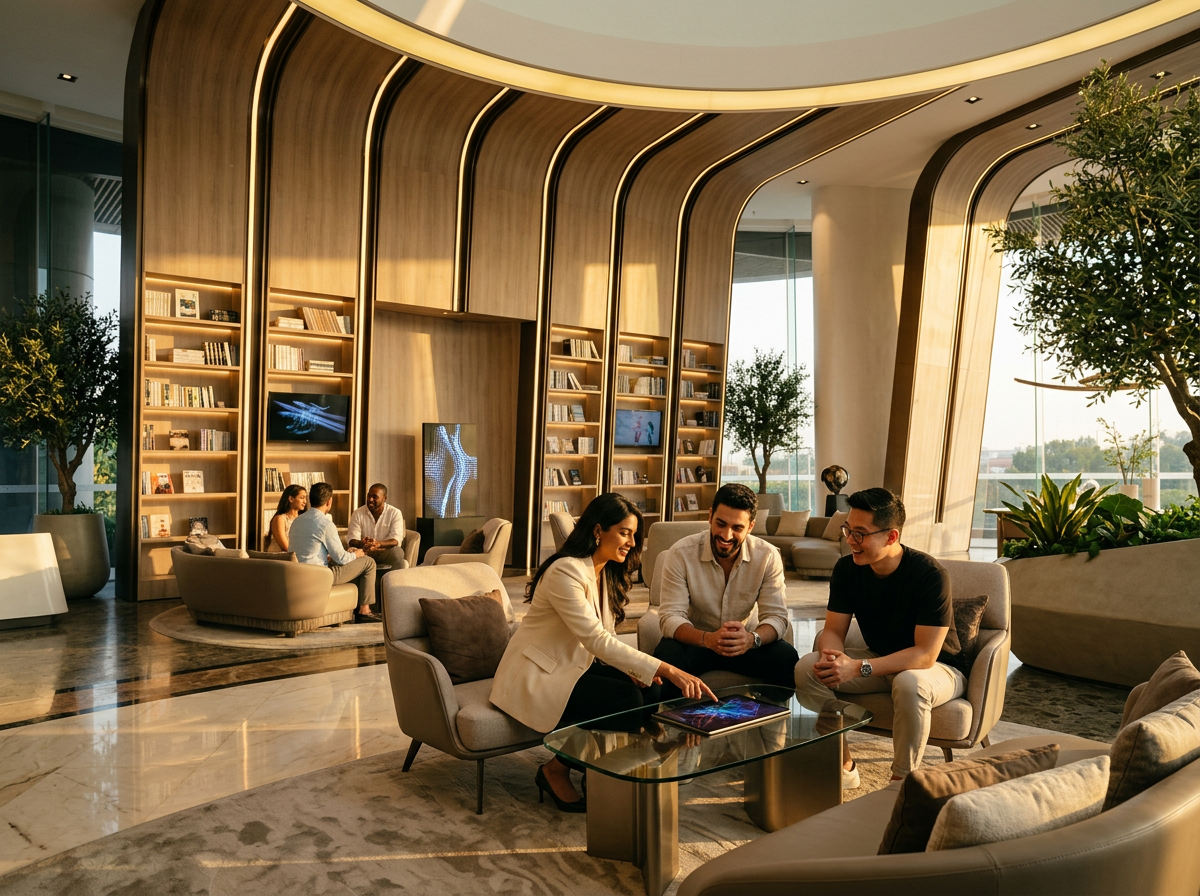
Merging technology with artistry elevates the guest experience. It transforms a traditional lobby into an interactive and engaging space.
Architectural Lighting Design Techniques
Lighting plays a crucial role in setting mood and atmosphere. Use various fixtures to highlight architectural features and create focal points. Employ adjustable lighting for different times of the day, ensuring that your lobby is always inviting.
Explore architectural lighting design techniques to craft a visually stunning environment. For example, LED lights can be used to accentuate textures or create dramatic shadows. The right lighting not only enhances aesthetics but also improves functionality, making it easier for guests to navigate.
AV Integration in Hospitality Spaces
Incorporating AV technology can transform your lobby into a dynamic environment. Screens displaying curated content or interactive installations can engage guests in new ways. These elements can introduce them to hotel services or local attractions, enhancing their stay.
Ensure seamless AV integration in hospitality spaces. Position screens strategically to capture attention without overwhelming the aesthetic. Use sound systems to provide ambient music that complements the visual elements, creating a harmonious atmosphere.
Digital Art Installations Impact
Digital art installations offer an innovative way to captivate guests and add sophistication to your lobby. They serve as conversation starters and can reflect your hotel’s theme or location.
Consider the impact of digital art installations. These can be dynamic displays that change throughout the day, providing visual interest and a fresh experience each time a guest passes by. They also offer an opportunity to showcase local artists, further embedding your hotel within its cultural context.
Merging Aesthetics with Functionality
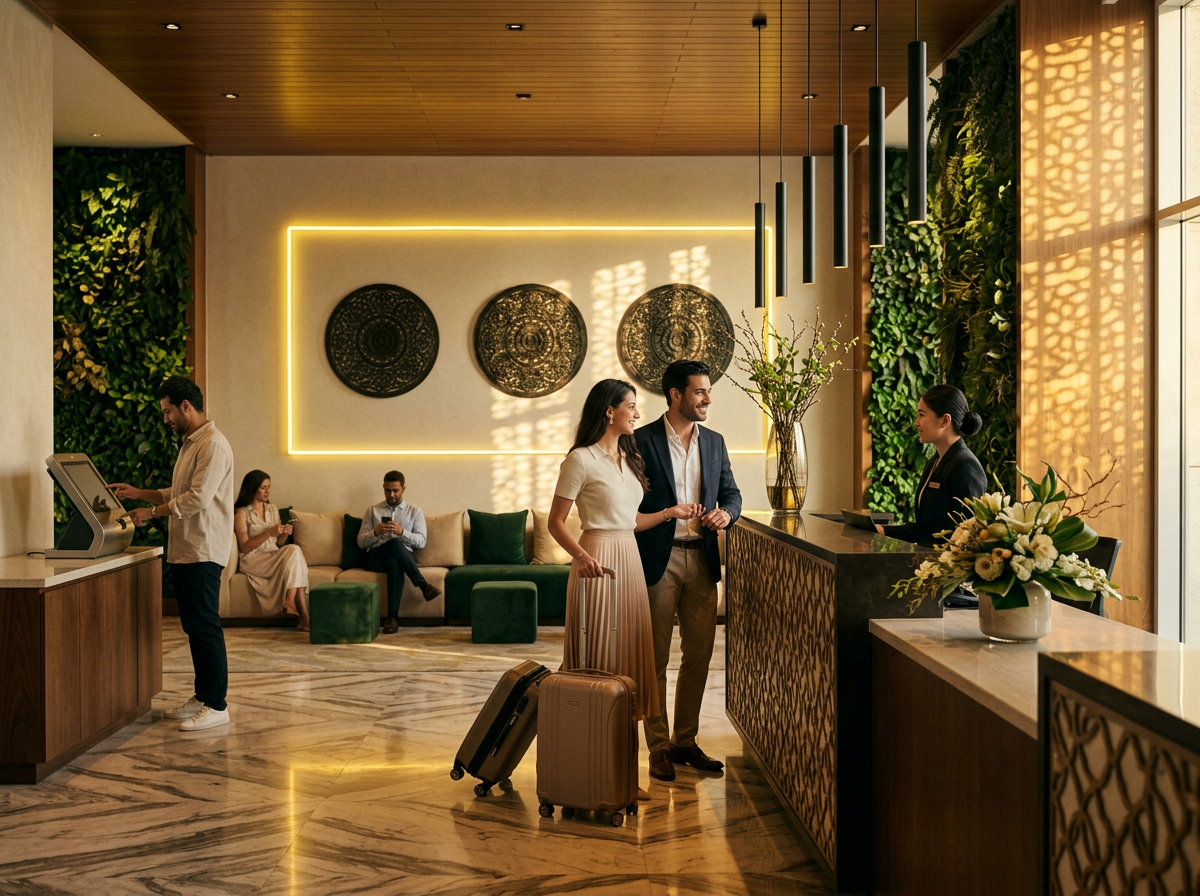
Achieving a balance between beauty and practicality is crucial for a high-performing lobby. This can be accomplished through thoughtful furniture selection and design innovations.
FF&E and Casegoods Selection
Furniture, fixtures, and equipment (FF&E) are essential in defining your lobby’s look and feel. Choose pieces that blend style with comfort. Opt for materials that are durable yet luxurious to withstand daily use while maintaining an upscale appearance.
When selecting FF&E and casegoods, consider the overall theme and color palette. Custom pieces can add a bespoke touch, enhancing the unique character of your lobby. Prioritize quality and design to ensure these elements contribute positively to the guest experience.
Acoustic Design for Comfort
An often-overlooked aspect of lobby design is acoustics. Proper sound management is key to creating a pleasant environment. Utilize materials that absorb excess noise, ensuring guests can enjoy a quiet space whether they’re relaxing or working.
Focus on acoustic design for hospitality settings. This might include acoustic panels or strategically placed rugs and curtains. A well-designed acoustic environment enhances comfort and can be a subtle yet powerful way to elevate the guest experience.
Smart Hospitality Technology in Lobbies
Integrating smart technology can significantly improve operational efficiency and guest satisfaction. From automated lighting to digital concierge services, technology can streamline processes and offer guests added convenience.
Investigate the possibilities of smart hospitality technology in lobbies. Implement systems that allow for personalized guest interactions, such as mobile check-ins or room preferences set through apps. Smart technology not only enhances the guest experience but also supports staff in delivering exceptional service.
Frequently Asked Questions
What is the importance of lobby design in hotels?
Lobby design is crucial as it forms the first impression for guests. It sets the tone for their stay and impacts their perception of the hotel’s brand and quality. A well-designed lobby enhances guest satisfaction and can increase revenue.
How does lighting affect hotel lobby design?
Lighting is key in creating ambiance and mood. It highlights architectural features and improves navigation. Proper lighting enhances aesthetics and functionality, making the lobby more welcoming and comfortable for guests.
What role does technology play in modern lobby design?
Technology enhances guest interactions and operational efficiency. It offers conveniences like mobile check-ins and digital concierge services. Integrating technology in lobby design also allows for personalized guest experiences and streamlined services.
How can hotels incorporate art into their lobby design?
Art can be integrated through installations or digital displays. It adds sophistication and reflects the hotel’s cultural or thematic elements. Art in lobbies serves as a conversation starter and can enhance the overall guest experience.
Why is acoustic design important in hotel lobbies?
Acoustic design ensures comfort by managing noise levels. It creates a pleasant environment for guests to relax or work. Proper acoustics improve the overall atmosphere, contributing to a more enjoyable guest experience.


