Forget the old rules of office design that no longer serve your evolving needs. Your workspace should match the sophistication of your brand and support a hybrid workplace with seamless technology and wellbeing at its core. In this post, you’ll see how modern office design blends luxury, smart integration, and purposeful layout to create spaces that inspire and perform—setting a new standard for corporate interior design in Dubai and beyond. For more inspiration, check out this link.
Luxury Workplace Design Principles
The modern office is a hub of productivity, innovation, and inspiration. Let’s explore how luxury design principles enhance this environment.
Integrating Smart Office Technology
Smart technology is transforming office spaces. Imagine walking into a room where lights adjust to your presence, screens synchronize with your devices, and climate controls are automatic. This isn’t just convenience; it’s a way to boost efficiency and reduce energy consumption. With smart integration, your team can focus on what truly matters. By making technology a seamless part of the workspace, employees can communicate effortlessly and stay connected. This approach not only improves workflow but also supports a flexible work environment.
Biophilic and Wellness Design
Bringing nature into the office is more than a trend; it’s a necessity. Elements like living walls, natural light, and indoor plants can significantly reduce stress levels. A study found that employees in biophilic offices report a 15% increase in overall well-being. This natural connection increases creativity and reduces absenteeism. By designing with well-being in mind, you create a space where employees thrive. When people feel good in their environment, they perform better.
Executive Office and Client Lounges
Your executive spaces and client lounges should exude sophistication and comfort. High-quality materials, elegant furnishings, and artful decor transform these areas into impressive showcases of your brand. Imagine a client stepping into a lounge that feels welcoming and luxurious. It sets the tone for successful interactions and leaves a lasting impression. These areas are not just about aesthetics; they reflect your company’s values and attention to detail.
Architectural Lighting and Acoustics
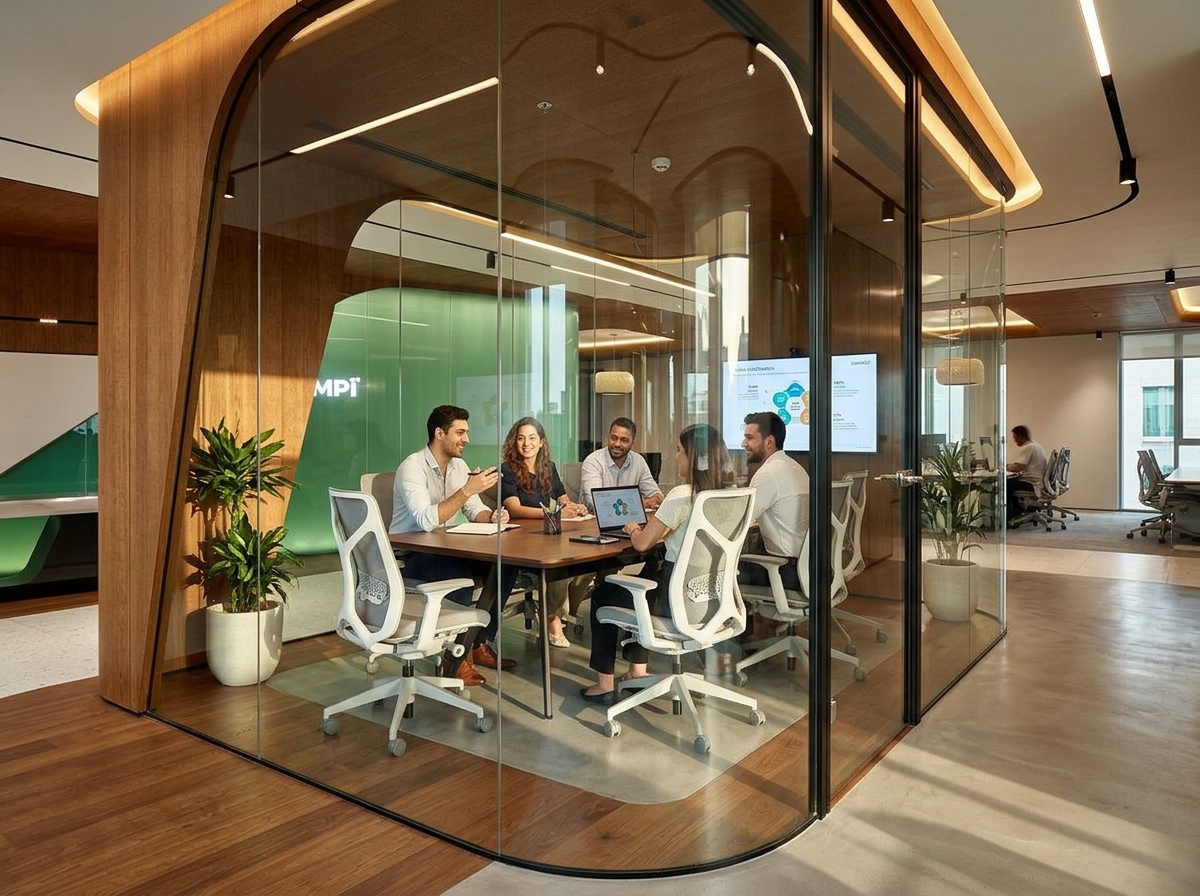
Lighting and acoustics are critical to creating a functional and inviting workspace. Let’s discuss their impact on workplace design.
Importance of Workplace Acoustics
Acoustics play a crucial role in office design. Noise levels can impact productivity and concentration. Optimized acoustic design creates a balanced sound environment, minimizing distractions. This means fewer interruptions and an increase in focus. By managing sound efficiently, you can enhance the overall work experience. Incorporating sound-absorbing materials and strategic layout planning helps in achieving a quiet, peaceful atmosphere.
Multi-layer Lighting Strategies
Lighting is more than just illumination; it’s about creating mood and enhancing functionality. Layered lighting combines ambient, task, and accent lighting to transform spaces. Each type serves a purpose: ambient lighting ensures general visibility, task lighting aids specific activities, and accent lighting highlights design features. Together, they create a dynamic and adaptable environment. With the right strategy, lighting can also boost morale and productivity.
Ergonomic Office Furniture Considerations
Furniture isn’t just about comfort; it’s about health and efficiency. Ergonomically designed furniture supports posture and reduces strain, which is vital for long-term employee well-being. Adjustable desks and chairs allow for customization, ensuring every employee can create a workspace that suits their needs. Investing in quality furniture is an investment in your team’s health and productivity.
Turnkey Design and Build Approach
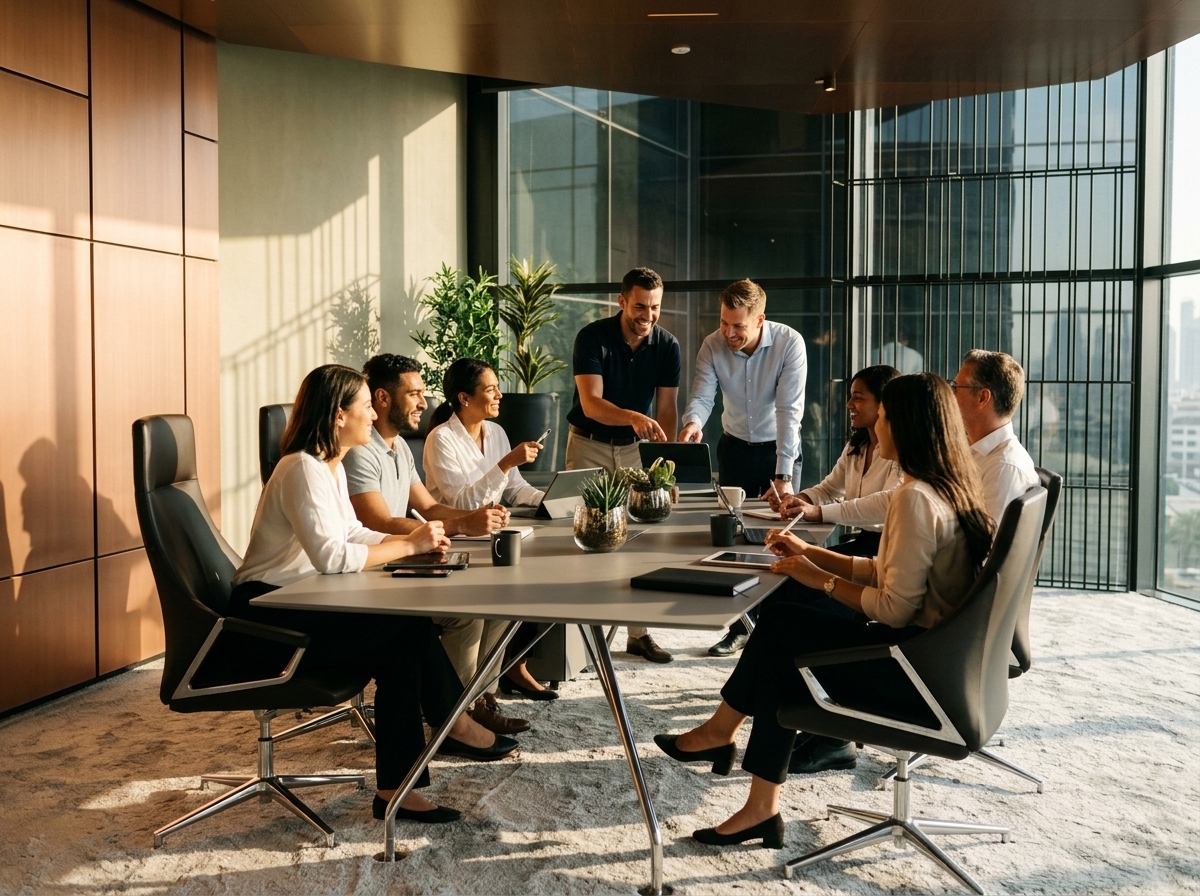
A comprehensive design and build approach simplifies the process and ensures consistency throughout your project.
Circulation and Adjacency Planning
Efficient circulation and adjacency planning streamline movement and collaboration within the office. By carefully considering the layout, you can optimize workflow and communication. This planning ensures that spaces are connected logically, enhancing productivity and reducing wasted time. It’s about creating a space where every element is in the right place, supporting daily operations seamlessly.
Sustainable Office Design Practices
Sustainability is a core aspect of modern office design. Using eco-friendly materials and energy-efficient systems reduces your carbon footprint. These practices not only benefit the planet but also result in cost savings over time. A sustainable office demonstrates your commitment to environmental responsibility, which can enhance your brand image and appeal to eco-conscious clients and employees.
Audiovisual Integration and Solutions
Audiovisual systems are essential in today’s tech-driven workplace. Integrated solutions ensure clarity in communication and presentations, supporting collaboration and engagement. High-quality AV setups enhance meetings, conferences, and client interactions. By investing in the right technology, you enable seamless information sharing and decision-making. This integration is key to a modern, functional office environment.
Frequently Asked Questions
What is the benefit of using smart office technology?
Smart office technology enhances efficiency and convenience by automating tasks like lighting, climate control, and device synchronization, allowing employees to focus on more important work.
How does biophilic design improve workplace productivity?
Biophilic design introduces natural elements into the office, reducing stress and boosting creativity, which enhances overall well-being and productivity.
Why is ergonomic furniture important in an office?
Ergonomic furniture supports proper posture and reduces physical strain, contributing to long-term health and improved employee productivity.


